Recent Blog Posts - Nationwide Boiler Inc. - Boiler Blog Archive | Nationwide Boiler Inc. - Page 27
Skip to main content

Boiler Blog Archive | Nationwide Boiler Inc.

Nationwide Boiler news and events, industry updates, technical resources and more. You hear it first on The Nationwide Boiler Blog!

Home of the Free, Because of the Brave

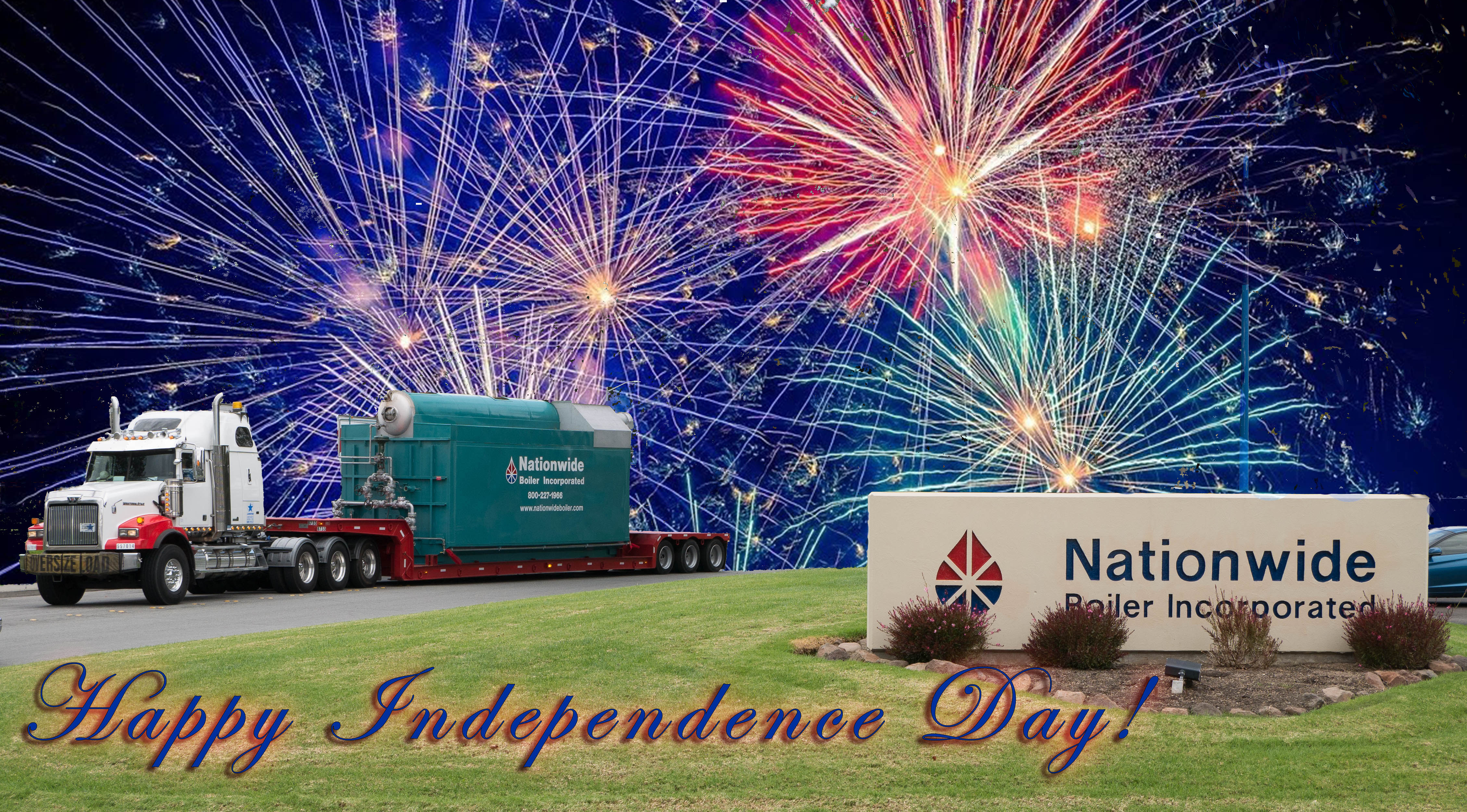
4th of July Boiler

Only July 2nd, 1776, the Continental Congress voted in favor of independence. Two days later, delegates from the 13 colonies adopted the Declaration of Independence, a historic document drafted by Thomas Jefferson, marking the birth of American Independence.

Take some time today to celebrate all that is great about America. And remember, as Albert Einstein once said, "Everything that is really great and inspiring is created by the individual who can labor in freedom."

Welcome Nationwide Boiler's Newest Representatives: GIANTECH Engineering and Aujan Industrial Solutions!

With business booming both domestically and overseas, Nationwide Boiler is pleased to announce that we have signed on two new representatives to cover our international client base. Please help us welcome GIANTECH Engineering Ltd. Pte and Aujan Industrial Solutions to the Nationwide representative network.

GIANTECH is a one-stop engineering and service organization for many marine and offshore equipment manufacturers, assisting ship owner/operators and fleet managers with their tanker and transport needs. In addition, they represent many boiler, burner, and related product manufacturers. We are already working with them on the potential of providing a new B&W boiler to one of our previous customers in Malaysia, and having that local support is a big advantage. GIANTECH will cover the ASEAN region (Singapore, Vietnam, Indonesia, and Malaysia).

Aujan Industrial Solutions (AIS) has provided the highest quality safety products and solutions to the oil and gas industry since 1977. AIS serves all segments of the market through their four branches located in key parts of the Kingdom. They provide turn-key project services, taking a job from the design phase all the way through commissioning and training, as well as installation, inspection, calibration, and maintenance services. Aujan Industrial Solutions' territories include the GCC Middle East (Saudi Arabia, UAE, Bahrain, Qatar, Kuwait, and Oman).

We look forward to building a larger client base in these regions and working with both of these reputable companies to provide superior steam solutions to customers across the world!

Why Rent a Mobile Boiler Room?

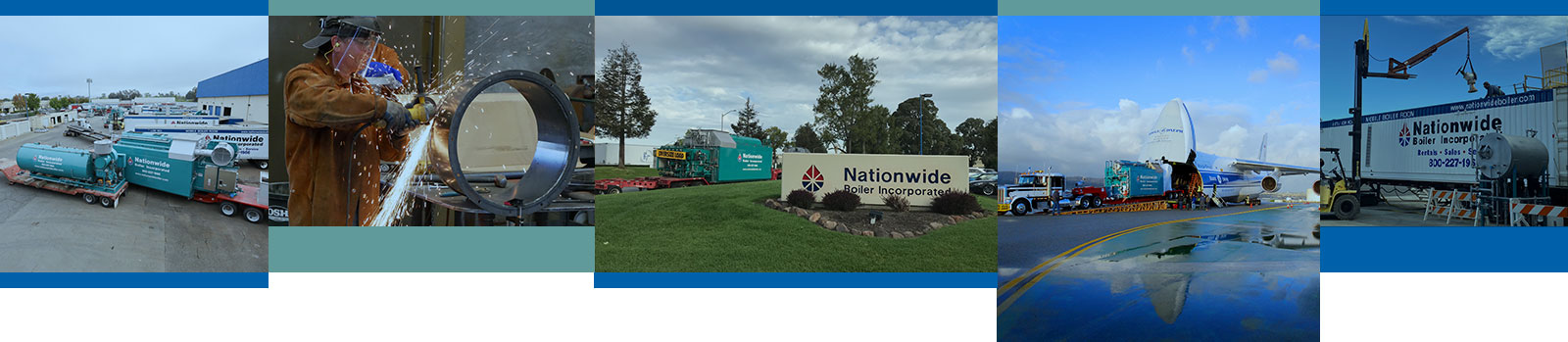
There are many different types of boiler options available in the rental market. Trailer-mounted boilers, skid-mounted boilers, transportable steam plants, and of course, mobile boiler rooms.

Mobile boiler rooms are highway-legal, transportable trailer-mounted vans or containers, designed and customized to house the components of a “mini” steam plant. This includes all of the necessary equipment with the proper hook-ups to supply a given amount of steam for most any application. Major equipment typically contained within a complete mobile boiler room includes a low NOx boiler, feedwater system, duplex water softener, chemical feed system, blowdown tank, and all valving and controls required for complete steam room operation. Typical mobile boiler rooms operate on natural gas, #2 oil, or propane, and range in size from 47.5 hp to 1,000 hp with design pressures from 150 to 290 psi.

What makes a mobile boiler room advantageous for end-users is that they require no special foundations, are fully enclosed, and can sustain inclement weather conditions without the use of costly weather protection. In addition, mobile boiler rooms are aesthetically pleasing in both industrial and commercial settings.

Nationwide Boiler has provided thousands of customers with high quality mobile boiler rooms that have not only met high steam demands, but have also required quick delivery, rapid start-up, and ease of operation. In most instances, a mobile boiler room requires one knowledgeable operator with proper training on boiler control safety and feedwater quality control. Industries that utilize mobile boiler rooms range from hospitals, food processors, pulp and paper plants, colleges and universities, and light manufacturing, just to name a few.

When deciding if renting a mobile boiler room is best for you, the following factors must be determined:

Continue reading

Understanding PPMVD and O2 Level Requirements

Have you ever wondered what ppmvd (ref. 3% O2) means? This term is often seen in air permits and is referenced as the emission unit for pollutants such as NOx from boilers.

PPMVD stands for “parts per million by volume, dry”.  For example, “9 ppmvd” refers to (9 / 1,000,000) x 100 = 0.0009% of the volume of flue gas. The reason they stipulate “dry” is because when the emission is measured, the instrument typically removes all moisture (water) from the sample. The “ref. 3% O2” is required as a benchmark for the oxygen content in the flue gas. This is because the boiler will operate at various O2 levels, and the air district needs to normalize the measurements.

Sometimes, emission limits are referenced with different O2 levels for equipment in the same plant.  For example, on a boiler application, NOx may be listed as 9 ppmvd (ref. 3% O2) whereas for a gas turbine it might be 9 ppmvd (ref. 15% O2).  What does it mean when the O2 levels are different?

The difference in the example above is that O2 is referenced at 3% and 15%. Looking at actual numbers will help explain the difference. Let's say a boiler or gas turbine is firing natural gas and the heat input is 100 million Btu/hr. The fuel flow is the same for each case, about 4500 lb/hr. The air flow, however, will be different. 

For boilers, the burner typically runs at about 15% excess air (this is 15% extra air flow above the stoichiometric requirement). In other words, 15% of the air flow passes through the system without being oxidized. This is why the stack O2 (O2 is the extra oxygen in the boiler flue gas flow) is about 3% on a dry basis. This also explains why the 3% O2 benchmark is typically used.Based on the 100 million Btu/hr input and 15% excess air, the boiler air flow is about 81,000 lb/hr. 

Continue reading