
Boiler Blog | Nationwide Boiler Inc.
- Details
In industrial settings where boilers are vital to operations, safety and reliability are non-negotiable. One often overlooked component is the fuel train, or gas train, which plays a critical role in controlling fuel delivery. During budget cuts, maintenance of this system is frequently deferred—an oversight that can lead to gas leaks, combustion failures, and serious safety hazards. For facilities operating high-pressure steam systems, regular gas train maintenance is essential to prevent incidents and ensure safe, reliable performance.
Understanding the Role of the Gas Train
The gas train is a system of mechanical and electrical components that regulate fuel flow and pressure to the burner. It includes shut-off valves, regulators, pressure switches, solenoids, and piping—all working together to ensure safe fuel delivery and immediate shutdown in unsafe conditions.
Gas trains are designed to:
- Control the fuel entering the boiler
- Shut off fuel in hazardous situations
- Maintain proper gas pressure
Even in systems equipped with modern burner management systems and interlocks, the effectiveness of these safety measures depends on proper maintenance and operator awareness.
Risks of Inadequate Maintenance
Neglecting gas train inspection and testing can lead to component failures that may not be immediately apparent but can compromise the entire combustion system. Common issues include:
- Leaking or sticking safety valves
- Inaccurate or failed pressure switches
- Improperly functioning regulators
- Worn or bypassed interlocks
- Electrical wiring faults
In many documented incidents, failures were not due to a lack of safety devices, but rather a lack of routine testing and operator training. Preventive maintenance is essential to avoid these scenarios.
Best Practices for Gas Train Safety
Implementing a structured maintenance and safety program can mitigate risks and improve system reliability. The following practices are strongly recommended:
1. Staff Training and Competency
Operators must be trained not only in basic boiler operation but also in combustion safety and hazard recognition. Training programs should include hands-on system reviews, mock upset drills, and instruction on emergency response procedures. Even when maintenance is outsourced, in-house personnel should have a fundamental understanding of the systems they oversee.
2. Written Startup and Shutdown Procedures
Many combustion incidents occur during equipment startup or shutdown. Standardized, clearly written procedures ensure consistency across shifts and personnel. These procedures should include purge verification, valve testing, and system readiness checks.
3. Routine Testing and Documentation
Facilities should establish a regular schedule for testing gas train components, including:
- Valve leak and tightness testing
- Functional testing of pressure switches and interlocks
- Flame safeguard system checks
- Compliance with applicable NFPA, ASME, and local code requirements
Documenting all tests and inspections ensures traceability and supports compliance efforts.
4. Third-Party Equipment Reviews
When acquiring new equipment or undergoing significant upgrades, a third-party review can help verify compliance, confirm correct installation, and identify design deficiencies. This is especially important when retrofitting legacy systems with modern controls or safety components.
5. Proactive Equipment Upgrades
Waiting for failure is not a viable safety strategy. Facilities should establish a timeline for replacing aging components and upgrading outdated systems. Modern PLC-based burner management systems and digital flame safeguards offer improved diagnostics, safety, and reliability.
Building a Culture of Safety
The safe operation of permanent boilers, rental boilers, and boiler combustion equipment depends not just on hardware, but on the culture and procedures that support it. Gas train maintenance should be treated as a critical operational task—not an afterthought. Investing in training, testing, and system upgrades enhances reliability, reduces unplanned downtime, and most importantly, protects personnel.
This blog post was originally published in September 2011 and has been updated to reflect current best practices, safety standards, and advancements in gas train maintenance.
- Details
Nationwide Boiler pro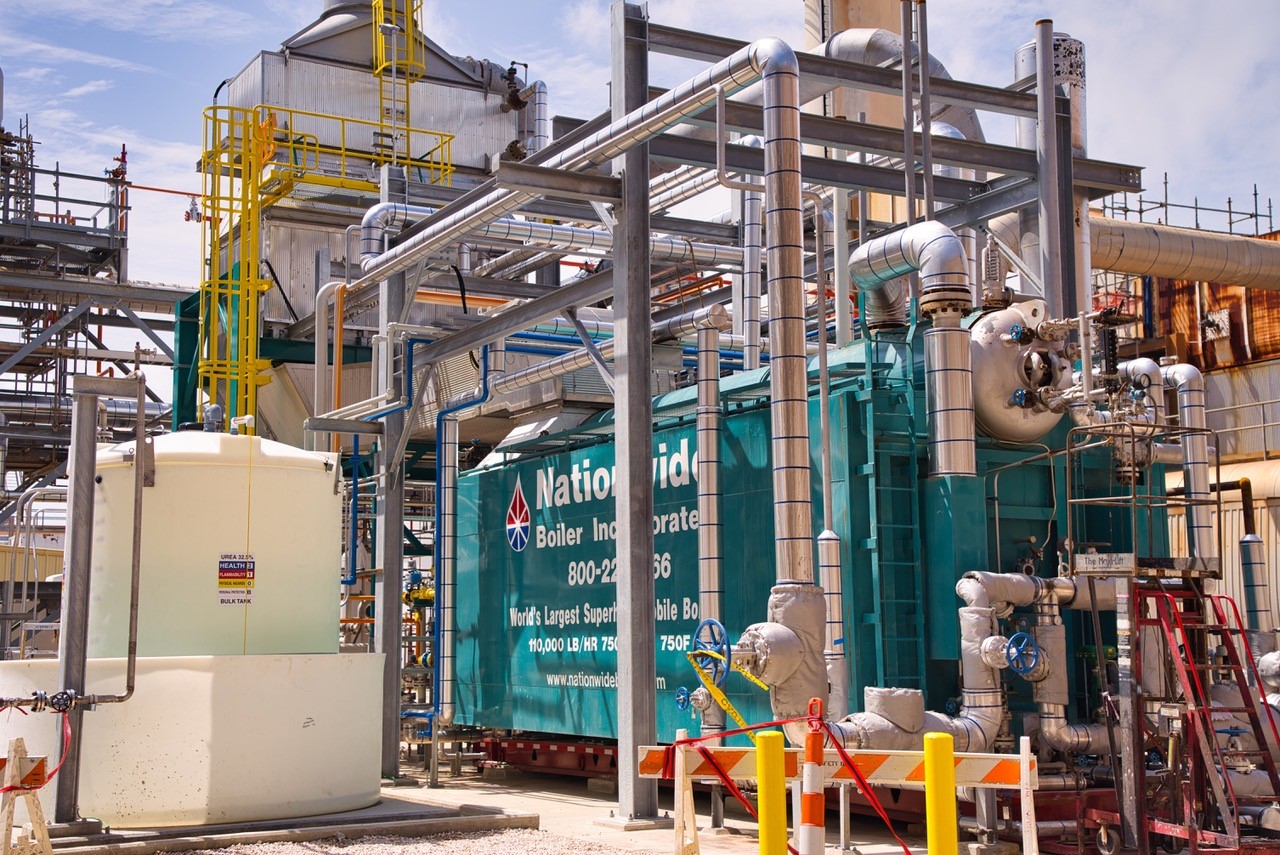 udly offers the world’s largest high pressure mobile steam boilers for industrial applications: the 150,000 pph saturated steam boiler and the 110,000 pph superheated Steam boiler, both trailer-mounted for unmatched mobility and rapid deployment. These high-capacity rental boilers set the industry standards for performance, flexibility, and reliability, delivering robust steam output for the most demanding industries.
Engineered for Performance and Flexibility
The 150,000 pph saturated steam boiler is engineered to provide consistent, high-volume steam for industries requiring a dependable temporary steam supply. With a design pressure of 650 psi and an operating range from 350 to 600 psi, this unit delivers exceptional operational flexibility and reliable output.
For applications demanding higher steam temperatures, the 110,000 pph superheated steam boiler is the ideal solution. This unit has a design pressure of750 psi and is built to supply 750°F superheated steam, with an operating range from 350 to 680 psi. Both boilers are trailer-mounted with removable gooseneck and running gear, ensuring true mobility, rapid installation, and flexible site placement for both temporary and long-term use.
Standard Features for Industry Leading Performance
- PLC Based Combustion Controls: Advanced, user-friendly controls for safe, efficient, and fully metered operation.
- EconoStak™ Economizer: Recovers heat from flue gases to enhance fuel efficiency and reduce energy costs.
- VFD Controlled Forced Draft Fan: Provides precise airflow control for optimal combustion.
- Comprehensive Safety Systems: Includes safety valves, low water cutoffs, and NEMA 4 electrical enclosures for reliable, safe operation.
- Emissions Compliance Options: Optional CataStak™ SCR system supports compliance with stringent emissions standards, offering ultra-low NOx performance down to 2.5 ppm.
- Flexible Fuel Options: Designed for natural gas, with capability for #2 oil and hydrogen blend fuels.
- Trailer Mounted, Highway Legal Design: Removable gooseneck and running gear for flexible site placement and rapid deployment.
Both package watertube boilers are fully piped, wired, and tested before shipment, e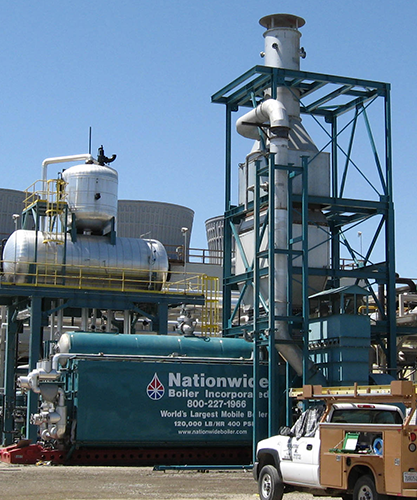 nsuring seamless setup and compliance with ASME, FM, NFPA 85, and GE GAP Insurance Standards. Additionally, boilers are weatherproofed (except for freezing conditions) and come with comprehensive operating manuals.
Saturated or Superheated Steam: Selecting the Optimal Solution
- Saturated Steam: Ideal for applications requiring fast, even heating such as process steam and heating, sterilization, and district energy. Saturated steam is efficient for heat transfer and can be easily controlled through pressure adjustments.
- Superheated Steam: Best suited for power generation and turbine driven equipment. Superheated steam remains dry at higher temperatures, improving thermal efficiency and reducing the risk of equipment corrosion.
Supporting Reliable Operations
Whether you need a rapid temporary solution or a long-term addition to your plant, Nationwide Boiler’s world’s largest 150,000 pph saturated steam and 110,000 pph superheated steam boilers provide reliability, efficiency, and flexibility. These world class boilers are engineered for demanding industrial environments, offering rapid deployment and operational flexibility for both planned projects and emergency situations.