Boiler Blog | Nationwide Boiler Inc.
- Details
June marks the 30th anniversary of National Safety Month, an annual initiative led by the National Safety Council (NSC) to promote workplace safety and reduce preventable injuries. For companies operating industrial boiler systems and steam plants, maintaining a strong safety culture is essential for protecting personnel, equipment, and facility operations.
Safety is a core value that Nationwide Boiler builds into everything we do. From maintaining our fleet of temporary rental boilers to responding to emergency steam needs, upholding a strong safety mindset helps protect employees, customers, and critical plant operations.
This year’s Week 1 theme, “Moving Safety Forward,” highlights the importance of proactive planning, employee engagement, continuous improvement, and leveraging new technologies to advance workplace safety.
Promoting First Aid Readiness
Even with the best prevention practices in place, incidents can still occur. That’s why first aid readiness remains an essential part of any safety program. At Nationwide Boiler, employees are provided opportunities to participate in CPR, First Aid, and AED training, helping build the knowledge and confidence needed to respond quickly and effectively to workplace injuries or medical emergencies.
Simple steps—such as routinely checking first aid kits, reviewing emergency response procedures, and ensuring employees know how to access help—can make a meaningful difference in response times and outcomes. Being prepared helps minimize the impact of injuries and supports a safer work environment for everyone.
Identifying and Addressing Safety Hazards
Preventing a safety incident starts with recognizing potential risks before they escalate. Routine safety inspections, open communication, and ongoing evaluation of work processes all contribute to identifying hazards early.
In boiler operations and industrial facilities, proactive measures such as equipment inspections, operator training, and adherence to established safety procedures help reduce risk and improve workplace safety. A strong safety culture encourages employees to speak up when they notice unsafe conditions and to take an active role in finding solutions. Taking corrective action early not only helps reduce the risk of injury but also minimizes equipment damage and unplanned downtime.
Embracing Safety Innovation
Continuous improvement often goes hand-in-hand with innovation. As workplace technologies continue to evolve, organizations have more tools available than ever to strengthen safety programs and support a proactive approach to risk management.
Digital inspection platforms, safety management systems, remote monitoring capabilities, and predictive maintenance technologies help companies identify potential issues earlier, improve visibility into operations, and streamline safety processes. In boiler plants, these technologies can be especially valuable for monitoring critical operating parameters such as pressure, temperature, water levels, and emissions.
Remote monitoring systems can alert operators to abnormal conditions before they become safety concerns, while predictive maintenance tools can help identify equipment wear and potential failures before they lead to costly downtime or hazardous situations.
Moving Safety Forward
Building a safe workplace requires more than policies and procedures—it requires commitment at every level of an organization. Ongoing training, employee involvement, and a proactive approach to continuous improvement all play an essential role. By focusing on first aid readiness, addressing hazards early, and embracing innovative safety solutions, companies can continue moving safety forward, creating safer, more reliable operations across the board.
To learn more about this year’s theme and access additional resources, visit the National Safety Council’s National Safety Month webpage. Throughout National Safety Month, we will continue sharing safety best practices for individuals, workplaces, and boiler systems to help facilities strengthen safety performance, reduce risk, and improve operational reliability. Stay tuned as we continue our series and explore next week's safety topic.
- Details
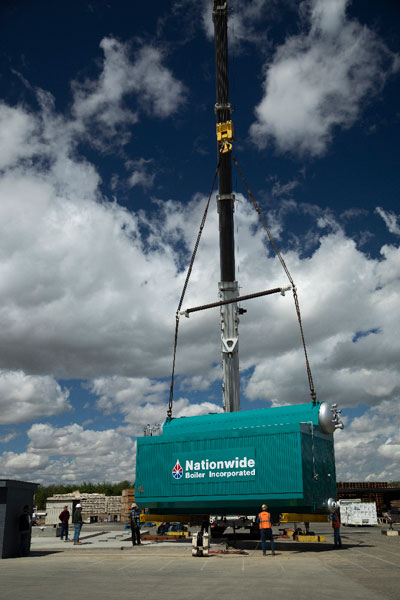 When timing is everything, Nationwide Boiler's in-stock boiler program delivers the solutions today’s industry demands. In 2025, ourteam successfully delivered a fast-track project including a 180,000 lb/hr, 500 psig B&W package watertube boiler with CataStak™ SCR system to a major West Coast food processing plant, overcoming logistical and regulatory challenges to keep production on track.
This delivery exemplifies our philosophy of “Boiler Procurement, Redefined” — giving customers immediate access to high‑capacity steam without the delays typical of traditional equipment sourcing.
Meeting Urgent Customer Needs with Strategic Boiler Procurement
The project began when a long-term customer faced a critical capacity challenge. As production needs outpaced their older equipment, the prospect of waiting a year for a new boiler was not viable. Thanks to our strategic in-stock boiler program, a high-capacity B&W package watertube boiler was available for immediate shipment, transforming a potential bottleneck into a rapid success story.
Nationwide Boiler maintains a broad range of in-stock solutions such as this 180,000 lb/hr model, enabling rapid shipping and installation across the United States and globally. Inventory covers everything from compact 50 HP vertical units to large 255,000 lb/hr superheated watertube boilers, including essential ancillary equipment like feedwater systems, blowdown separators, water softeners, and CataStak™ SCR Systems for ultra-low NOx compliance. This diversity enables customers to access rapid replacements or planned upgrades without lengthy lead times and fabrication delays.
This is exactly what “Boiler Procurement, Redefined” means: eliminating the long lead times and uncertainty typically associated with major steam equipment purchases.
Overcoming Logistics and Delivery Challenges
Transporting equipment of this scope requires both engineering expertise and logistical finesse. Because the 180,000 lb/hr boiler was too large to transport upright, it was rotated 90 degrees and shipped on its side from Kansas to California, with police escorts ensuring both public safety and on-time arrival. When trucking emerged as the optimal solution over rail due to control and delivery timeline concerns, the engineering and logistics teams coordinated every phase to maintain speed and reliability.
Preparation also extended beyond transport. Early piping and foundation work enabled site teams to quickly tie in connections and reduce installation timeframes once the boiler arrived. By managing complex moves like this, we continue redefining what boiler procurement can look like — faster, smoother, and engineered for control.
Navigating Emissions Compliance and Customization
Permitting requirements are often the major hurdle for large steam projects, especially in states like California with strict air district requirements. In this case, the replacement boiler required compliance with stringent emissions standards including 2.5 PPM NOx, 10 PPM ammonia slip, and 25 PPM CO. Our project team worked closely with both the end-user and regulatory authorities, customizing the system with Nationwide’s CataStak™ SCR technology and an enhanced heat-recovery economizer to minimize emissions and maximize operating flexibility.
The ability to match technical solutions such as fully metered controls and customized economizers to each customer’s needs establishes Nationwide Boiler as a trusted partner for food processors, petrochemical companies, and manufacturers with tight project windows and demanding performance expectations.
Proactive Planning Pays Off for Mission-Critical Steam
A key takeaway for plants facing urgent steam shortages is that planning ahead is vital. Boiler owners and operators should consult with their team early to establish tie-in points, assess site needs, and prepare for seamless installation should an emergency arise. With standardized drawings, in-stock units, and engineered ancillary packages available, facilities can trust Nationwide Boiler to help them avoid costly downtime and accelerate timelines when every hour counts.
This proactive approach aligns with our vision of “Boiler Procurement, Redefined” — enabling facilities to prepare for the unexpected and deploy solutions without delay.
The Nationwide Advantage: Inventory, Experience, and Customer Commitment
Whether the need is for new, reconditioned, or rental boilers, Nationwide Boiler’s extensive inventory and experienced technical staff enable companies to address equipment failures or fast-track expansion plans. Our in-stock inventory spans a wide range of capacities, support equipment, and compliance solutions, ready to ship and ready to solve real-world challenges.
Looking for a boiler solution ready on your schedule? Nationwide Boiler delivers on site and on time, backed by decades of expertise, redefining the traditional model for boiler procurement.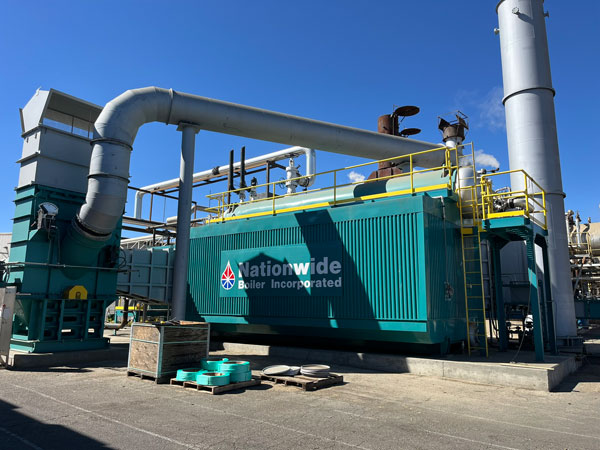
- Details
At Nationwide Boiler, we’ve spent more than four decades helping industries meet demanding emissions requirements with solutions that deliver reliability, performance, and proven results. Our CataStak™ Selective Catalytic Reduction (SCR) System is one of those solutions—engineered to achieve ultra-low, single-digit NOx emissions on package boilers and a wide range of fired equipment. As air-quality regulations continue to tighten, understanding NOx and the importance of emissions control is more critical than ever.
What Is NOx?
NOx, or nitrogen oxides, represents a group of highly reactive gases formed when nitrogen and oxygen combine during high-temperature combustion. These emissions are common in industrial boilers and fired equipment, including:
- Package boilers
- Fired heaters
- Gas turbines
- Heat recovery steam generators
The amount of NOx produced depends on several operational factors:
- Fuel type
- Burner design
- Peak combustion temperature
- System configuration
- Use of emissions-control technology such as an SCR
Why Reducing NOx Emissions Matters
Once released into the atmosphere, NOx contributes to a series of reactions that impact both environmental quality and human health. Even at low concentrations, these gases can significantly affect regional air quality.
- Ground-Level Ozone (Smog)
NOx reacts with volatile organic compounds (VOCs) in the presence of sunlight to form ground-level ozone—a major component of smog. Unlike the protective ozone layer, this type of ozone is harmful, contributing to crop damage, reduced visibility, and stressed vegetation.
- Acid Rain Formation
When NOx combines with moisture in the atmosphere, it forms nitric acid, a leading cause of acid rain. Acid rain can accelerate the deterioration of buildings, deplete soil nutrients, and disrupt lakes and streams.
- Water Quality Concerns
Nitrogen compounds from NOx emissions can wash into waterways, fueling algae growth. These algal blooms reduce oxygen levels, harm aquatic life, and create lasting ecological imbalances.
- Climate Influence
While NOx itself is not a greenhouse gas, it contributes indirectly to climate change by forming ground-level ozone, which is considered a greenhouse gas. Reducing NOx helps minimize an operation’s overall environmental footprint.
- Human Health Considerations
Exposure to NOx can irritate the respiratory system and worsen existing lung conditions. Elevated levels may increase asthma attacks, aggravate bronchitis, and reduce overall lung function. Children, older adults, and individuals with respiratory sensitivities face the greatest risk.
Since the early days of federal emissions legislation, Nationwide Boiler has been a trusted partner in helping facilities meet—and exceed—air-quality requirements. Our team provides engineered solutions tailored to each application, supporting reliable performance and long-term compliance.
For operations that require deeper emissions reduction or consistent performance across a wide operating range, our CataStak™ SCR System delivers emissions compliance without compromise. The CataStak has been proven across hundreds of installations on boilers and fired equipment in demanding industrial environments. Its modular design supports both ammonia and urea-based reagent systems, allowing facilities to choose the solution that best aligns with their operational and safety requirements. With horizontal and vertical configurations, the CataStak can be engineered to fit a wide variety of system layouts, space constraints, and performance needs. Regardless of the application, the result is the same: reliable, near-zero NOx emissions and a system built for long-term, cost-effective operation.
Ultra-low NOx burners are another viable option, designed to minimize NOx formation at the source by optimizing air–fuel mixing and reducing peak combustion temperatures. These burners have consistently demonstrated the ability to achieve ultra low NOx emissions, as low as 5 ppm in many firetube boiler applications. Through ongoing research and development, we’ve also seen promising results at even lower levels in select operating conditions—particularly on smaller firetube boiler systems. While these advancements continue to be refined, they highlight the potential for future solutions that push emissions performance even further.
And lastly, for facilities looking to eliminate combustion-related emissions entirely, electric steam boilers offer a viable, zero-emissions-at-the-source alternative. Because they operate without fossil fuels, electric boilers do not produce NOx, CO, or greenhouse gases at the point of use. While they are not the right fit for every application—particularly where high steam capacities are required—they can be an effective option in regions with clean, reliable electricity or for processes with strict emissions or permitting requirements.
Nationwide Boiler remains committed to helping facilities operate cleaner, more efficiently, and more sustainably. Our decades of experience—and the proven performance of our environmental solutions—ensure that your operation can meet today’s air-quality standards and future requirements with confidence.
Originally posted in July 2017, this blog has been updated to reflect current information and evolving air-quality regulations.